
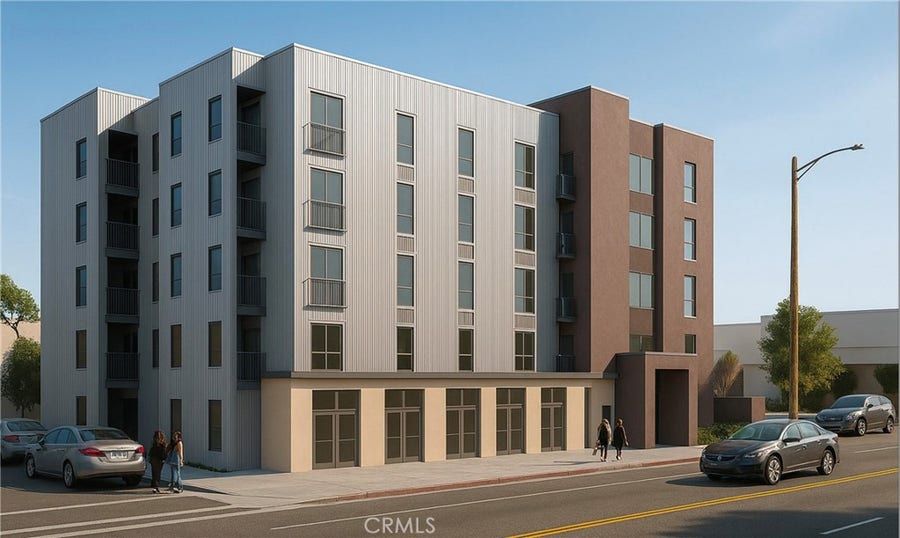
Investment Property: A Los Angeles Buyer’s Guide
An investment property should be evaluated as an operating business, not simply as a home that someone else will help pay for. Rent is revenue, not profit. A promising asking price can still lead to weak results when financing, repairs, vacancy, insurance, taxes, and legal obligations are included.
For investors in Los Angeles, Beverly Hills, and the San Fernando Valley, the property’s exact jurisdiction and lawful use also matter. Two buildings with similar asking prices can have very different income limitations, maintenance requirements, and financing options.
This guide explains the numbers, documents, and decisions behind a residential investment purchase. It uses hypothetical examples to show how an apparently attractive rental can produce negative cash flow—and how to recognize that before buying.
What is an investment property?
An investment property is real estate acquired primarily to generate rental income, appreciation, or another financial return rather than to serve solely as the buyer’s home. Common examples include rental houses, condominiums, and multifamily properties.
Loan classifications depend on actual occupancy and use. Fannie Mae distinguishes principal residences, second homes, and investment properties in its mortgage guidance.[1] Describe your intended use accurately to the lender.
The label does not establish quality. A good investment requires an understandable plan for income, expenses, financing, reserves, and eventual exit. It also requires a realistic assessment of the owner’s responsibilities and ability to handle an unfavorable period.
Define the strategy before searching for properties
Different strategies require different expertise and risk tolerance. A stabilized long-term rental, a renovation project, and a development site should not be evaluated with the same assumptions.
Write down the intended source of return. Will the investment rely primarily on current rental income, gradual principal repayment, renovation, future appreciation, or development? Which parts are supported by existing evidence, and which depend on future execution?
A clear strategy helps prevent changing the story whenever the numbers disappoint. If a property marketed as a cash-flow investment only works after assuming substantial appreciation, that is a different investment thesis. Recognize the change rather than quietly treating it as the original plan.
Choose a property type that matches your capacity
A rental house
A detached rental may offer a straightforward physical layout, but a vacancy can remove all scheduled rental income. Review the major systems, exterior responsibilities, and realistic turnover costs.
A condominium
Shared building responsibilities can simplify some tasks, but association dues, restrictions, assessments, and rental rules require careful review. A lower purchase price does not automatically produce a better return.
A small multifamily property
Several units can spread income across multiple tenancies, but they also increase operational and document-review requirements. Understand unit legality, leases, shared utilities, and maintenance obligations.
The appropriate property type is the one you can finance, understand, and operate responsibly—not simply the one with the highest advertised yield.
Gross rent is the beginning of the analysis
Gross scheduled rent is the income expected if all units pay the stated rent for the full period. It does not account for vacancy, collection losses, operating expenses, debt payments, or capital work.
Distinguish current contractual rent from a seller’s projected market rent. A listing may show both, and they can produce very different conclusions.
For an occupied property, review the leases, rent roll, payment history, concessions, and supporting records. For a vacant property, analyze comparable rental offerings and realistic leasing assumptions. Do not treat an asking rent in another advertisement as proof that your property will achieve the same income immediately.
Calculate net operating income consistently
For this guide, net operating income, or NOI, means effective rental and other operating income minus ordinary property operating expenses, before mortgage debt service and income taxes.
Operating expenses should reflect the property: taxes, insurance, management, ordinary repairs, owner-paid utilities, and other applicable recurring costs. Clearly identify how reserves and larger capital replacements are treated, because different analyses may present them differently.
Consistency matters more than an impressive-looking number. A seller’s NOI that excludes management and maintenance is not comparable with a buyer’s estimate that includes them. Ask for the underlying line items and rebuild the calculation using assumptions you can defend.
Understand cap rate without confusing it with your return
In this guide, capitalization rate, or cap rate, equals annual NOI divided by the purchase price. A property with $44,400 of annual NOI and an $800,000 price has a 5.55% cap rate.
That measure is before financing and income taxes. It is not the return on your down payment, and it does not include every future cost or change in value.
Check whether an advertised cap rate uses actual income, projected income, or a proposed future condition. A calculation based on rents that cannot currently be collected is not the same as one based on verified operations. The formula is simple; the quality of its inputs determines its usefulness.
A worked example: attractive rent, negative cash flow
Consider a hypothetical $800,000 rental property producing scheduled rent of $6,000 per month, or $72,000 annually. Assume a 5% allowance for vacancy and collection loss.
| Annual operating item | Hypothetical amount |
|---|---|
| Gross scheduled rent | $72,000 |
| Vacancy and collection allowance | Minus $3,600 |
| Effective rental income | $68,400 |
| Operating expenses | Minus $24,000 |
| Net operating income | $44,400 |
Now assume a $600,000, fully amortizing, 30-year loan at 7.00%. Annual principal and interest would be approximately $47,902. After an additional $4,000 annual capital-reserve contribution, cash remaining would be approximately negative $7,502.
The property has positive NOI and a 5.55% cap rate, yet it requires additional cash after financing and the reserve allocation.
What belongs in the example’s operating expenses?
The $24,000 expense assumption is an illustrative total, not a quote or a recommended budget for an $800,000 Los Angeles property.
A real analysis should break it into property taxes, insurance, management, ordinary repairs, utilities paid by the owner, and other recurring charges. Verify each material line rather than relying on one blended estimate.
Avoid double-counting. If taxes and insurance are already included in operating expenses, subtract only principal and interest when calculating mortgage debt service in this model—not a mortgage payment that includes the same escrowed expenses again. Also distinguish a reserve contribution from an actual capital expenditure so the same replacement is not counted twice without explanation.
Cash-on-cash return measures a different relationship
For this example, define cash-on-cash return after reserves as annual pre-tax cash available after operations, debt service, and the stated reserve contribution, divided by all cash initially committed to the project.
Assume the buyer commits $200,000 down, $20,000 in acquisition costs, $20,000 for initial work, and $20,000 as an opening reserve. Total committed cash is $260,000.
Using the negative $7,502 annual result, the after-reserve cash-on-cash figure is approximately negative 2.89%. This definition explicitly includes reserved cash in the initial commitment; other presentations may use different conventions. State the convention so comparisons remain fair.
The calculation does not include appreciation, tax effects, or the benefit of principal reduction. It answers a narrower cash-distribution question.
More equity can improve cash flow without improving the property itself
Suppose the same hypothetical property is financed with a $400,000 loan rather than $600,000, keeping the same 7.00% rate and 30-year term solely to isolate the arithmetic.
Annual principal and interest would be approximately $31,935. After NOI of $44,400 and a $4,000 reserve contribution, approximately $8,465 would remain before income taxes.
The property’s NOI and 5.55% cap rate have not changed. The owner has reduced debt payments by committing more cash. Using $460,000 of total initial cash under the same other assumptions, the after-reserve cash-on-cash result would be approximately 1.84%. Better cash flow does not automatically mean a stronger return on the larger cash commitment.
Use debt-service coverage as a stress signal
A basic debt-service coverage ratio, or DSCR, divides income available for debt service by annual debt service. In the first example, using NOI as that numerator produces $44,400 divided by $47,902, or approximately 0.93.
Under this stated calculation, income before the separate capital reserve is insufficient to cover principal and interest. That is an important warning.
Lenders may define qualifying income, expenses, and debt service differently for different products. Do not assume this simplified ratio establishes loan eligibility or that every product advertised as a “DSCR loan” uses this exact formula. Request the lender’s written methodology and compare it with your own operating budget.
Investigate expenses that the seller’s history may understate
Historical statements are useful, but some expenses may change after purchase. The seller’s financing is not your financing, and the seller’s insurance arrangement is not necessarily available to you.
Los Angeles County’s Assessor explains that a change in ownership can lead to a supplemental assessment. Review the expected property-tax treatment with the appropriate professionals rather than copying the seller’s historical bill into your forecast.[2]
Also consider expenses the seller handled personally. Unpaid owner labor still represents a task someone must perform. Your analysis should show whether you will do that work or pay for it, instead of treating the work as nonexistent.
Budget for vacancy and larger repairs before they occur
A property can produce a positive average year and still create a cash shortage when several expenses arrive together. Vacancy, turnover work, and a system replacement may overlap.
Build an initial reserve and a plan for replenishing it. Base the amount on property condition, income concentration, debt obligations, and access to other funds—not just a familiar percentage.
Separate ordinary repairs from major replacements. A maintenance line may cover small recurring work while failing to account for a roof or major equipment. The purpose of reserves is to make predictable categories of uncertainty manageable, not to pretend the timing and amount of every future expense can be known.
Tenant laws are part of the investment analysis
California’s Tenant Protection Act limits rent increases for covered properties to 5% plus the applicable change in the cost of living, subject to a 10% maximum. Coverage, exemptions, timing, and local protections require verification. The California Department of Justice explains that local rules may be more protective.[3]
Do not assume a purchase allows immediate increases to advertised market rent or eliminates existing tenant rights. Review the actual tenancies and applicable law before relying on a change in income.
The correct financial model follows the lawful operating plan. A projection based on an unsupported rent increase is not merely optimistic; it may describe an income stream you cannot implement.
Los Angeles city rules do not apply uniformly across the county
The City of Los Angeles has its own Rent Stabilization Ordinance, commonly called the RSO. The Housing Department describes coverage that generally includes certain older rental housing, with important exceptions and property-specific details.[4]
Beverly Hills, other incorporated cities, and unincorporated county areas can have different requirements. A mailing address or broad neighborhood label is not enough to identify the correct framework.
Confirm jurisdiction, lawful unit count, relevant registrations, and applicable tenant protections with official records and qualified counsel. Then incorporate compliance responsibilities into the operating plan. The legal review should occur before the investment depends on a proposed change in occupancy, rent, or use.
Short-term rental income needs a separate legal review
Do not underwrite a property using short-term rental revenue solely because nearby homes appear on a booking platform.
Los Angeles City Planning’s home-sharing guidance ties the city’s program to eligibility requirements, including primary-residence restrictions and registration. Not every property can lawfully operate under the same arrangement.[5]
For a prospective investment, confirm the exact use allowed by the jurisdiction, the property’s status, association rules where applicable, insurance, and financing. A projected nightly rate is not evidence of legal eligibility. If the short-term strategy is unavailable, evaluate whether the property still works as a lawful alternative rental rather than assuming the restriction can be addressed later.
Management is an operating function, even when you do it yourself
Tenant communication, maintenance coordination, bookkeeping, vendor oversight, and legal compliance require time. Self-management can reduce certain cash expenses, but it does not remove the work.
Estimate the time commitment and decide whether you have the availability and skills to perform it responsibly. A property far from your home or one requiring frequent coordination may create a different burden from a simpler nearby rental.
When comparing management proposals, review scope, fees, maintenance authorization, reporting, leasing responsibilities, and termination terms. The lowest quoted fee is not necessarily the lowest total cost when important services are excluded or accountability is unclear.
Treat fair housing compliance as a core responsibility
Rental advertising, screening, and operations must comply with applicable fair housing requirements. HUD identifies federal protections against housing discrimination based on specified protected characteristics.[6]
Develop consistent, lawful criteria and have qualified professionals review your process. Do not select neighborhoods or tenants using demographic stereotypes, and do not rely on an automated screening tool as a substitute for compliance oversight.
For investment purposes, evaluate the property’s location through relevant features such as access, condition, lawful use, expenses, and documented rental demand. The goal is a responsible business that provides housing, not a strategy built around excluding protected groups.
Tax treatment can differ from cash flow
Rental taxation involves rules for income, deductible expenses, depreciation, improvements, and loss limitations. IRS Publication 527 explains that residential rental buildings generally use a 27.5-year depreciation recovery period under the applicable system, while land is not depreciable.[7]
Depreciation is not the same as a cash payment, and a repair is not automatically treated the same as a capital improvement. Eligibility and limitations can affect when deductions are usable.
Work with a qualified tax professional using the rules for your actual tax year. Do not assume a tax deduction makes a negative-cash-flow property affordable or that every reported loss immediately reduces taxes on unrelated income.
Understand ROI, IRR, and RTI without mixing them up
ROI, or return on investment, is a broad measure whose usefulness depends on how the calculation defines gain, cost, and time. Always ask what is included.
IRR, or internal rate of return, evaluates a series of cash flows over time. Its result depends heavily on projected distributions and sale proceeds; precise output does not make uncertain assumptions reliable.
RTI, in the Los Angeles development context, generally means Ready to Issue in the permitting process. It is not a rental-return ratio. A development opportunity advertised with RTI plans requires a separate review of permit status, scope, deadlines, costs, and feasibility. LADBS distinguishes approval steps from actual permit issuance.[8]
Stress-test more than one variable
A useful stress test examines lower collected rent, higher operating expenses, a longer vacancy, and unexpected capital work. Also consider the financing structure and any future payment changes.
Do not change every variable only in the favorable direction. A realistic downside scenario can combine weaker income with higher costs because problems do not always arrive separately.
Ask how much additional cash would be required and whether the household or business could provide it without jeopardizing essential obligations. The objective is not to eliminate all risk. It is to understand which risks you are accepting and whether the investment has enough room to survive them.
Plan the exit before making the purchase
Identify plausible future buyers and uses without assuming that every exit will remain available. A property suitable for long-term rental may not be equally attractive for immediate resale or redevelopment.
Estimate sale expenses, outstanding debt, taxes requiring professional review, and the effect of a slower selling process. Model a flat or lower sale price as well as appreciation.
An exit plan should explain what you would do if the original holding period changes. Selling, refinancing, or continuing to operate each has different conditions and costs. A strong plan does not depend on one favorable transaction occurring at exactly the right moment.
Audit the investment story before trusting the summary
Create a simple evidence trail for every material assumption. A rent figure should connect to a lease, payment record, or clearly identified projection. An expense should connect to an invoice, quote, contract, or explained estimate.
Mark the confidence level of each item. Verified historical information, a current third-party quote, and a preliminary assumption are not interchangeable. A property with several uncertain inputs may need a wider contingency or more investigation before a firm purchase decision.
Pay particular attention to assumptions that make the deal appear profitable. If a small change in rent or repairs eliminates the expected return, those inputs deserve more scrutiny than a minor administrative fee.
Test a small income shock
Return to the hypothetical example with $72,000 in gross scheduled rent and $68,400 after the stated vacancy allowance. Suppose an additional $6,000 of rent is not collected beyond the loss already allowed for.
Holding every other assumption constant solely for illustration, NOI falls from $44,400 to $38,400. With the original $600,000 loan and $4,000 reserve contribution, the annual cash shortfall grows from approximately $7,502 to approximately $13,502.
The example does not predict a vacancy. It shows how a single additional income interruption can change the cash required from the owner. In practice, turnover may also create expenses, so model the relevant costs rather than assuming income is the only affected line.
Decide who will monitor the plan after closing
An investment analysis should not disappear once the purchase is completed. Compare actual income and expenses with the assumptions and investigate meaningful differences.
Assign responsibility for financial records, reserve monitoring, maintenance planning, and compliance reviews. When actual performance weakens, identify whether the cause is temporary, structural, or the result of an inaccurate original assumption.
This ongoing process is part of owning the investment. A carefully prepared purchase model is useful, but the operating decisions that follow determine whether the property remains financially and practically manageable.
Frequently asked questions about investment property
Can a property have positive NOI but lose money each month?
Yes. NOI is calculated before mortgage debt service in this guide. Once principal and interest and a reserve contribution are subtracted, the remaining cash can be negative. Review the full sequence rather than stopping at the operating-income number.
Is a high cap rate always better?
No. The inputs may be optimistic, expenses may be omitted, or the property may carry risks that require a higher apparent yield. Compare verified income, condition, lawful use, and operating responsibilities. A ratio does not explain why it is high.
Should I buy a rental that only works after raising rents?
Treat that as a conditional plan requiring legal and market verification. Confirm whether the increases are permitted, when they could occur, and whether the property can be supported before then. Do not substitute projected income for current income without showing the transition costs and risks.
Can I use the seller’s mortgage payment in my analysis?
No. Model your own financing terms and actual acquisition costs. The seller may have a different balance, rate, term, or loan structure. Their cash flow is not your expected cash flow after purchase.
Does a larger down payment make a weak property a good investment?
It can reduce debt service and improve cash flow, but it does not improve the property’s underlying operating income. Compare the result with the additional cash committed and the remaining risks. Financing can change the outcome without repairing weak assumptions.
Buy the operating plan, not the sales pitch
A well-evaluated investment property has documented income, realistic expenses, appropriate financing, adequate reserves, and a lawful plan for operation. Its potential return is understandable without relying entirely on appreciation or an aggressive rent forecast.
Rana Real Estate helps buyers explore property opportunities in Los Angeles, Beverly Hills, and the San Fernando Valley. Contact Rana Real Estate to discuss your investment criteria and organize the property-side questions that deserve investigation.
This article is educational, not individualized investment, tax, legal, or lending advice. Examples are hypothetical and exclude some property-specific factors. Confirm assumptions with qualified professionals before purchasing.
Sources and references
Sources checked October 17, 2026. Reporting periods and hypothetical examples are identified in the article.
- Fannie Mae Selling Guide: Occupancy Types
- Los Angeles County Assessor: New Homeowners and Supplemental Property Taxes
- California Department of Justice: Limits on Rent Increases
- Los Angeles Housing Department: RSO Overview
- Los Angeles City Planning: Home-Sharing Frequently Asked Questions
- U.S. Department of Housing and Urban Development: Housing Discrimination Under the Fair Housing Act
- Internal Revenue Service: Publication 527 (2025), Residential Rental Property
- Los Angeles Department of Building and Safety: What should I do after my plan and application have been approved?