
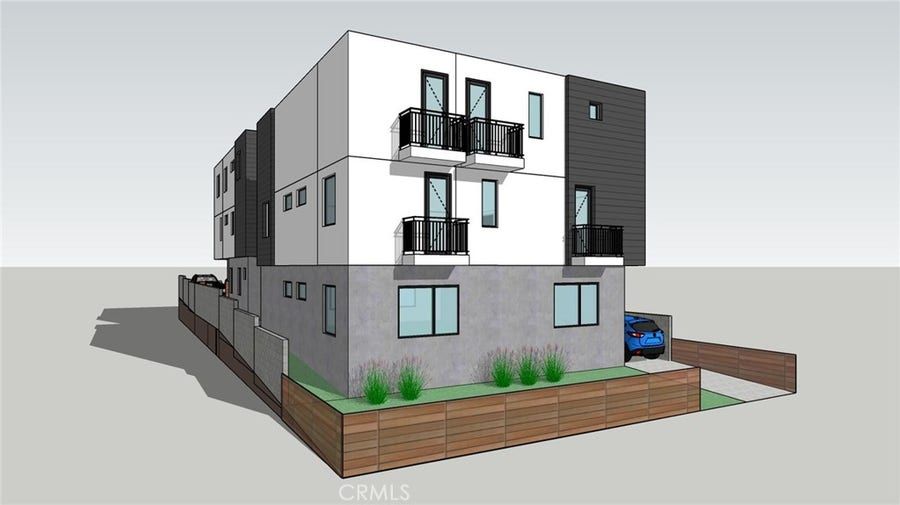
Benefits of Owning a Home vs. Renting in Los Angeles
The benefits of owning a home vs. renting are often presented as a simple contest: owners build wealth, while renters pay someone else’s mortgage. That framing leaves out too much. Ownership can provide equity, control, and long-term continuity, but it also requires capital, maintenance, and the ability to manage uncertainty.
Renting provides a place to live, contractual rights, and flexibility. It can also preserve money for other goals. The better choice depends on the home, the financing, the local rental alternative, and your expected circumstances.
For households in Los Angeles, Beverly Hills, and the San Fernando Valley, the useful comparison is not ownership in the abstract. It is a specific purchase versus a realistic rental that would meet similar needs.
What are the main benefits of owning instead of renting?
Owning a home can help you build equity through principal repayment, provide greater control over the property, and support longer-term housing plans. Renting can offer lower upfront commitments, easier relocation, and fewer direct maintenance responsibilities. Neither option is automatically less expensive or financially superior.
Freddie Mac’s rent-or-buy guidance encourages considering finances, lifestyle, responsibilities, and future plans rather than treating ownership as the correct answer for everyone.[1]
Begin with the housing experience you need and the financial commitments you can support. Then compare the options honestly, including costs that are easy to overlook and benefits that are not purely financial.
Benefit one: principal repayment can build equity
Home equity is the property’s value minus debt secured by it. Your down payment creates initial equity, while principal repayment can increase that equity over time. Changes in property value can increase or decrease it.
With a typical fully amortizing mortgage, each scheduled payment includes interest and principal. Early payments generally allocate more toward interest, with the allocation changing as the balance declines. CFPB explains this repayment process in its mortgage guidance.[2]
The important distinction is that the entire mortgage payment does not become savings. Interest is a borrowing cost. Property taxes, insurance, and maintenance also do not directly reduce the loan balance. Equity is one part of the ownership picture, not a label for every dollar paid.
A simple principal-repayment example
Consider a hypothetical $600,000, fully amortizing, 30-year fixed mortgage at 7.00%. The monthly principal-and-interest payment is approximately $3,992.
In the first month, approximately $3,500 is interest and $492 reduces principal. After 60 scheduled payments, the remaining balance is approximately $564,790, meaning about $35,210 of principal has been repaid.
These figures exclude taxes, insurance, mortgage insurance, fees, and other ownership expenses. They also assume the borrower follows the scheduled payments without extra principal or changes to the loan.
The example shows why principal repayment matters, while also showing why a mortgage payment should not be described as entirely “paying yourself.”
Benefit two: ownership offers more control over your living space
An owner often has more scope to personalize a home than a renter operating under a lease. Layout decisions, finishes, landscaping, and long-term improvements may be easier to align with personal preferences.
That control has limits. Permit requirements, association rules, recorded restrictions, shared responsibilities, and other obligations may affect what can be changed. Ownership is not automatic authorization for every proposed project.
Before buying, identify the changes that are central to your plans. Verify their feasibility rather than assuming they can be addressed later. Greater control is most valuable when the property’s actual restrictions are compatible with what you want to do.
Benefit three: a home can support longer-term continuity
For some households, ownership provides a more durable base for work, relationships, accessibility needs, and everyday routines. The ability to make longer-term plans in one place can have substantial personal value.
This benefit is not identical for everyone. Some renters remain in the same home for many years, while owners may move because of finances, employment, or changing needs.
Treat continuity as a preference to evaluate rather than a universal ownership advantage. How much do you value staying in this particular location? How likely is the home to remain suitable? A property that creates continuity for one household may create unwanted constraints for another.
Benefit four: some mortgage costs can be predictable
With a fixed-rate mortgage, scheduled principal and interest follow the loan’s terms rather than changing with each movement in market rates. That can make one major component of the housing budget easier to plan.
However, a fixed mortgage rate does not fix the total cost of owning. Taxes, insurance, association dues, utilities, and repairs can change. Some costs arrive irregularly rather than in equal monthly amounts.
For planning purposes, distinguish predictable financing costs from variable property costs. This avoids replacing one oversimplification—“rent always rises”—with another—“ownership costs never rise.” Both renters and owners should evaluate the actual rules and expenses relevant to their housing.
Benefit five: ownership creates exposure to future property value
An owner participates in increases and decreases in the property’s value. Appreciation can improve equity, but it is not guaranteed, and a short-term decline can matter greatly when a sale becomes necessary.
Leverage makes this especially important. A mortgage allows a buyer to control a property with less than its full price in cash, but the debt does not automatically fall when the property’s value falls.
Do not use expected appreciation to justify a purchase that is otherwise unaffordable. Model flat and less favorable values as well as growth. A home should meet a housing need and have a workable ownership plan even when the investment result is uncertain.
Potential tax benefits require individual review
Some homeowners may qualify for tax benefits, but the outcome depends on eligibility, tax rules, and their individual returns. Mortgage interest is not automatically deductible for every borrower or every dollar of borrowing. IRS Publication 936 explains the relevant conditions and limits.[3]
Likewise, a qualifying sale of a principal residence may receive favorable tax treatment, but eligibility requirements and exceptions apply. IRS Publication 523 addresses those rules.[4]
Do not subtract a generic “tax savings” amount from the payment unless a qualified tax professional has evaluated your situation. This article refers to the IRS’s available guidance, including its 2025 publications; confirm the rules applicable to your actual tax year.
Renting provides benefits that ownership does not replace
Less capital committed to one property
A renter typically does not need to fund a home purchase, although deposits, moving expenses, and other upfront costs can still be substantial. Money not committed to a down payment can remain available for emergencies, education, a business, or investments.
More flexibility to relocate
A rental arrangement can be easier to leave at the end of its term than an owned property is to sell. The actual flexibility depends on the lease and applicable law, so read the agreement rather than assuming relocation is cost-free.
Fewer direct property-management responsibilities
A renter may have fewer direct obligations for major building repairs, though the lease and law determine responsibilities. This can be valuable to someone who prefers not to manage contractors, replacement schedules, or unpredictable capital projects.
Rent is payment for housing, not automatically wasted money
Rent purchases the use of a home for an agreed period. It can also provide flexibility and shift certain responsibilities away from the occupant.
Ownership similarly includes expenses that do not build equity: interest, insurance, taxes, maintenance, and transaction costs. Paying those expenses may be worthwhile, but describing rent as the only unrecoverable housing expense creates an unfair comparison.
A better question is what each option provides for its complete cost. A renter who saves or invests the difference may build wealth through other assets. An owner may build equity while receiving personal benefits from the property. Neither result follows automatically; behavior and actual costs matter.
Compare homes that provide similar utility
A frequent mistake is comparing the rent on a small apartment with the cost of buying a much larger house and attributing the entire difference to ownership. That comparison also includes a change in housing quality and space.
Identify a realistic rental alternative to the proposed purchase. Consider location, size, parking, outdoor space, condition, commute, and household needs.
Perfect matches may not exist, but acknowledge material differences. You may decide that ownership is worth paying more because it provides something unavailable in a suitable rental. That is a legitimate preference. It should be presented as a lifestyle tradeoff, not disguised as proof that one tenure type is always cheaper.
Build a complete ownership budget
Separate recurring expenses from irregular costs and upfront cash requirements. A useful budget includes the mortgage, taxes, insurance, association charges where applicable, utilities, maintenance, and a reserve for larger repairs.
CFPB’s affordability guidance emphasizes accounting for additional ownership costs and retaining room in the household budget, rather than using only the mortgage payment.[5]
Use property-specific estimates whenever possible. An older home with uncertain systems, a condominium with shared obligations, and a recently improved detached property may require different assumptions. A generic maintenance percentage can be a starting point, but it is not a substitute for understanding the home’s condition.
A hypothetical Los Angeles rent-versus-buy comparison
Suppose a household is considering a $750,000 home with a $150,000 down payment and a $600,000 mortgage. At a hypothetical 7.00% fixed rate over 30 years, principal and interest would be approximately $3,992 per month.
Assume, solely for this illustration, another $1,100 monthly for property taxes and insurance and $500 for maintenance and future repairs. Total budgeted ownership cost would be approximately $5,592 before any additional charges not included in those assumptions.
Now assume a reasonably comparable rental costs $3,800 monthly. The initial difference is approximately $1,792 per month. These are not current market quotes or a tax estimate for a particular property. They provide a framework for comparing the choices.
What the monthly comparison tells you—and what it does not
The example suggests that renting requires less monthly cash under those assumptions. It does not establish the final long-term financial result.
Part of the mortgage payment reduces principal. Rent, property expenses, and property value may change. The buyer commits substantial upfront cash, while the renter may retain and potentially invest that cash. Buying and selling create transaction expenses that have not yet been included.
The comparison is therefore a starting point. It identifies the size of the ongoing commitment and the assumptions requiring further analysis. Avoid turning a useful first calculation into a complete conclusion simply because one number is lower.
Understand what happens to equity when you sell
Continue the same hypothetical example. After five years of scheduled mortgage payments, the balance is approximately $564,790.
If the property still sells for $750,000, the difference between price and loan balance is approximately $185,210. However, that is not the cash the seller necessarily receives.
Assume total selling expenses equal 5% of the sale price for illustration only; this is not a standard commission or a quote. Those expenses would be $37,500, leaving approximately $147,710 after the mortgage payoff, before taxes or other adjustments. The example shows how principal repayment and selling costs can interact even when the home’s price remains unchanged.
Equity is not the same as profit
The hypothetical seller receives approximately $147,710, but originally contributed a $150,000 down payment and also paid purchase costs and ownership expenses. The proceeds cannot be described as pure profit.
To evaluate a financial return, include all relevant cash invested and received over a consistent period. Keep housing consumption benefits separate from investment performance so the calculation remains understandable.
This distinction also helps avoid overstating appreciation. A property that rises in value may still produce a modest net result after financing, improvements, carrying costs, and selling expenses. Conversely, an owner may value the home highly for personal reasons even when its investment return is unremarkable.
Consider the opportunity cost of the down payment
Money used for a down payment is money unavailable for another purpose. That does not make ownership a poor choice; it means the comparison should acknowledge the alternative.
A renter might invest retained cash, pay down other debt, or preserve a stronger emergency reserve. The actual benefit depends on what the renter does and on uncertain investment outcomes.
Do not assume an unrealistically high guaranteed return for the renter, just as you should not assume guaranteed appreciation for the owner. Use a range of reasonable scenarios and account for differences in risk, taxes, and liquidity. The objective is a fair comparison, not a model designed to favor a predetermined answer.
Ownership can concentrate financial risk
For some households, the home becomes their largest asset and the mortgage their largest obligation. That can create exposure to a particular property, location, and financing commitment.
Ask how much of your available wealth would be tied to the purchase and what would remain accessible. Consider how a major repair, income interruption, or earlier move would affect the plan.
A larger down payment can reduce borrowing but also reduce liquidity. A smaller down payment can preserve cash while increasing financing costs or other obligations. Evaluate the whole structure rather than assuming that maximizing or minimizing leverage is universally best.
Home equity may not be immediately available when needed
Equity is not the same as cash in a savings account. Accessing it may require selling the property or obtaining additional financing, with associated costs, conditions, and repayment obligations.
For your budget, do not treat estimated appreciation as an emergency reserve. A future sale price is uncertain, and additional borrowing requires its own evaluation.
Keep a practical amount of accessible savings separate from the home. The appropriate amount depends on household circumstances, property condition, and income stability. The principle is straightforward: the money needed for a near-term problem should not depend entirely on completing another real estate or lending transaction.
Renting in California also involves rules and protections
Rent changes and tenancy rights depend on the property, location, and applicable law. California’s Department of Justice explains that statewide rent limits apply to many, but not all, rental homes, and that some local rules provide different or greater protections.[6]
Do not assume every rental has unlimited annual increases, or that every California unit follows the same limit. Verify coverage and the actual lease terms.
For a rent-versus-buy analysis, use a realistic rental-growth scenario informed by the applicable rules, rather than an arbitrary escalation selected to make buying look better. Legal questions about a particular tenancy deserve qualified advice.
Match the decision to your stage of life without stereotypes
The right choice is not determined by age, marital status, or a social expectation that successful adults must own property. Focus on the individual household’s needs and plans.
Someone expecting a geographic move may value renting. Another person may prioritize adapting a home for long-term accessibility. A household with variable income may need greater liquidity, while another may place a high value on making permanent improvements.
These preferences can change. Choosing to rent now does not mean rejecting ownership forever, and buying now does not mean the property must remain suitable indefinitely. A good decision fits the current plan while leaving room for reasonable uncertainty.
A practical way to choose between owning and renting
Start with a comparable pair of housing options and a consistent planning horizon. Estimate upfront costs, recurring costs, and the likely financial position at the end of that period under several scenarios.
Then add the nonfinancial factors: control, flexibility, maintenance responsibilities, stability, and the suitability of the home. Explain which factors matter most rather than pretending they can all be reduced to one percentage.
Finally, check whether either option creates an unacceptable risk. A purchase that exhausts cash reserves may deserve reconsideration even if an optimistic model favors owning. A rental that does not meet essential needs may also be unsuitable despite its lower price.
Put a value on the work each housing option requires
A financial comparison can overlook the time spent managing a home. An owner may coordinate repairs, review insurance, obtain estimates, and plan replacements. A renter may spend less time on those tasks but still face lease administration, maintenance requests, and the possibility of moving.
Estimate the responsibilities that matter most to you. Someone who enjoys managing improvements may view that work differently from someone with limited time or little interest in supervising projects.
Do not assume that doing the work yourself makes it free. It may reduce cash expenses, but it uses time that could serve other personal or professional goals. Conversely, hiring help creates a cost that should appear in the ownership budget.
Discuss the decision within the household
When more than one person will share the home, compare expectations before focusing on a specific property. How will expenses be handled? Who will coordinate maintenance? How much cash should remain accessible? What happens if one person wants or needs to move?
Joint purchasing can involve legal and financial questions that deserve individualized professional advice. The practical starting point is an honest conversation about responsibilities and priorities, rather than assuming everyone values ownership in the same way.
A household can agree that owning is desirable while disagreeing about the right price, property, or timing. Resolving those differences early can be more valuable than finding a slightly lower mortgage rate.
Revisit the comparison when circumstances change
The answer to renting versus owning is not necessarily permanent. A change in location plans, savings, income, household needs, or available properties can justify a new comparison.
Keep the original assumptions so you can see what has actually changed. This helps avoid interpreting every new listing or rent notice as proof that the earlier decision was wrong.
A good housing decision should be judged by the information and reasonable alternatives available when it was made. Future outcomes can provide lessons, but they do not mean a household should have predicted every market movement. The useful goal is a resilient choice, not a perfect forecast.
Frequently asked questions about owning versus renting
Is owning always better if I plan to stay for five years?
No. Five years is not a universal break-even point. The result depends on the price, financing, rent alternative, ownership expenses, transaction costs, property value, and use of retained cash. Model your situation rather than relying on a familiar rule of thumb.
Does paying a mortgage mean I am paying myself?
Only the principal-repayment portion directly reduces the loan balance. Interest and other ownership costs serve different purposes. A mortgage can contribute to equity building, but describing the entire payment as savings overstates the benefit.
Can renting be a deliberate wealth-building strategy?
Yes, when it fits the household and retained money is used productively. Renting alone does not create wealth, just as ownership alone does not guarantee it. Savings behavior, investment choices, costs, and risk management all influence the outcome.
Should tax deductions determine whether I buy?
They should be evaluated only after confirming eligibility and the likely benefit with a qualified tax professional. A possible deduction should not be used to justify an otherwise unsuitable or unaffordable purchase. Compare the home on its complete economics and personal value.
What is the strongest sign that I should keep renting for now?
One important sign is that buying would leave you unable to handle ordinary ownership surprises or likely life changes. That does not mean ownership is permanently out of reach. It may indicate a need for a different budget, more savings, or a clearer timeline.
Choose the housing arrangement that supports your goals
The benefits of owning a home can be substantial: equity-building opportunities, greater control, and a place to support long-term plans. Renting offers valuable benefits of its own, particularly flexibility and a smaller commitment to one property.
Rana Real Estate helps buyers evaluate homes across Los Angeles, Beverly Hills, and the San Fernando Valley. Contact Rana Real Estate to discuss what ownership would look like for your budget, preferred location, and plans.
This article is educational and does not provide individualized tax, legal, or investment advice. All numerical examples are hypothetical. Review your circumstances and current requirements with qualified professionals.
Sources and references
Sources checked October 17, 2026. Reporting periods and hypothetical examples are identified in the article.
- Freddie Mac My Home: Rent or Buy, Which Option Is Right for You?
- Consumer Financial Protection Bureau: How does paying down a mortgage work?
- Internal Revenue Service: Publication 936 (2025), Home Mortgage Interest Deduction
- Internal Revenue Service: Publication 523 (2025), Selling Your Home
- Consumer Financial Protection Bureau: How can I figure out if I can afford to buy a home?
- California Department of Justice: Limits on Rent Increases