
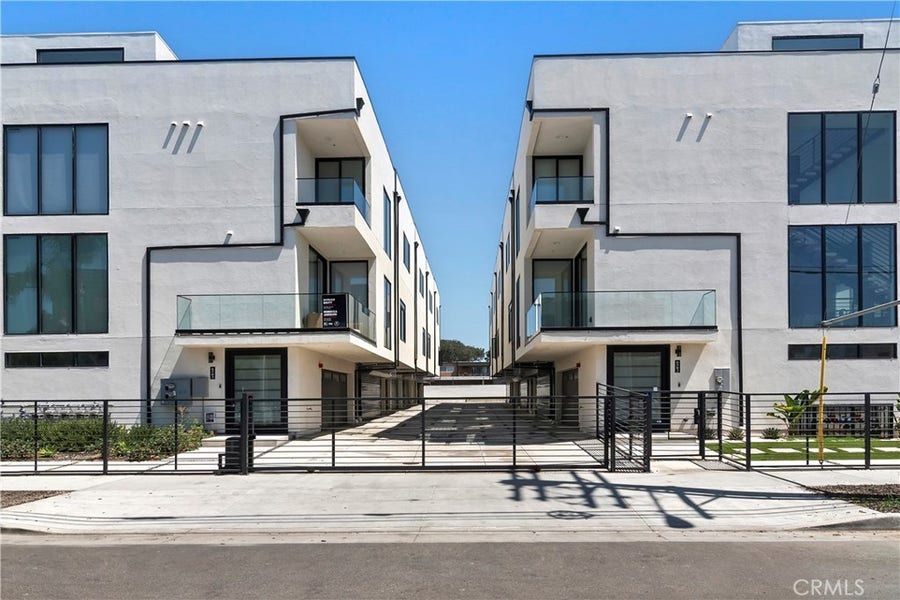
Buyer’s Market: How to Buy With More Leverage
A buyer’s market can create more room to negotiate, but it does not automatically make every home a bargain. Some properties remain competitive because of their location, condition, price, or unusual features. Others sit unsold because the asking price is unrealistic or the property carries risks that a discount will not resolve.
For buyers in Los Angeles, Beverly Hills, and the San Fernando Valley, the opportunity is to become more selective, more analytical, and less reactive. Negotiating power is most valuable when it helps you purchase a suitable home on terms you understand.
This guide explains how to recognize a buyer-friendly situation, organize an offer, evaluate concessions, and avoid confusing a lower price with a better investment.
What is a buyer’s market?
A buyer’s market exists when the supply of homes is relatively large compared with buyer demand, giving purchasers more choice and potentially more negotiating power. Common signs include longer marketing periods, increasing available inventory, and sellers adjusting prices or offering concessions. No single indicator proves that every property or neighborhood favors buyers.[1]
The phrase describes conditions, not a guarantee. A well-priced home can attract multiple offers within a generally slower market. A difficult property can remain negotiable even when surrounding homes sell quickly. Your task is to understand the specific segment and the specific seller’s options.
Start with the market you can actually purchase in
“Los Angeles real estate” is too broad to function as a complete buying strategy. Your relevant market might be two-bedroom condominiums within a particular budget, detached homes with usable outdoor space, or small residential income properties with documented rents.
A buyer considering a condominium in the San Fernando Valley should not base an offer entirely on statistics for luxury detached homes in Beverly Hills. The properties attract different demand and involve different ownership costs.
Define a useful comparison group before studying trends. Include location, property type, size, condition, parking, association obligations, and the price range you can support. A tighter comparison set usually provides more actionable evidence than a dramatic countywide headline.
Look for several signals, not one convenient statistic
More competing listings
When several suitable homes compete for the same buyers, a seller may have fewer alternatives. Count actual substitutes rather than every listing in a large search area. A property with major condition issues is not necessarily a realistic substitute for a move-in-ready home.
Slower movement through the market
Longer marketing periods may indicate less urgency, but investigate listing history carefully. A home can be withdrawn, relisted, or repriced. The current days-on-market number may not tell the whole story.
More visible price adjustments
Price reductions can reveal that the original strategy did not produce a sale. They do not establish current value on their own. Compare the revised asking price with relevant closed sales and competing listings, not just with the original number.
Understand months of supply without turning it into a rulebook
Months of supply is a simple relationship between available inventory and the pace of sales. In a hypothetical segment with 90 active listings and 15 monthly sales, the calculation is 90 divided by 15, or six months.
That does not predict that every home will need six months to sell. It is an aggregate measure under a simplified assumption that the sales pace stays constant and no new listings are added.
Use the measure alongside price reductions, pending contracts, and actual alternatives. A single threshold can be misleading across neighborhoods and property types. You may have considerable leverage in a small segment even when a broader market summary sounds balanced.
Separate a negotiating opportunity from a property problem
An overpriced but otherwise suitable home may become attractive after a sensible adjustment. A property with unresolved structural, insurance, title, or permit questions requires more than a discount.
Consider two hypothetical listings with the same asking price. One needs cosmetic updates that qualified professionals can estimate. The other has unclear records for an addition and incomplete information about major systems.
Both may be negotiable, but the uncertainty is different. A buyer’s market should give you room to investigate, not pressure you to accept vague assurances because the seller agreed to a reduction. The best use of leverage may be obtaining reliable information before committing further.
Prepare financially before using your negotiating power
A clear offer depends on knowing what you can actually purchase. Determine your comfortable monthly ownership budget, available cash to close, and reserves after the transaction.
A mortgage preapproval is useful, but it is not a final promise of financing. CFPB explains that prequalification and preapproval labels can vary and that later verification and property review still matter.[2]
Coordinate your financing review before negotiations become time-sensitive. Ask the lender which conditions remain outstanding and which property characteristics could affect approval. A buyer who understands the financing process can negotiate confidently without presenting uncertain assumptions as settled facts.
Build an offer from evidence, not from a standard discount
There is no universal percentage below asking that defines a good buyer’s-market offer. An asking price may already be competitive, or it may be far above what comparable evidence supports.
Start with a reasonable value range based on similar completed sales, then consider the current competition and the home’s condition. Explain meaningful adjustments rather than inventing a precise value from incomplete information.
A low offer can be justified, but the justification matters. “The market is slow” is weaker than showing that two comparable alternatives offer similar utility at lower total cost. A persuasive offer connects the proposed terms to the property, the evidence, and your ability to complete the purchase.
Find out what the seller actually values
Price is important, but sellers can have other priorities: a predictable closing date, time to move, fewer unresolved conditions, or a clear process for handling repairs.
Ask through the appropriate real estate professionals rather than speculating about personal circumstances. An extended listing period does not prove distress, and public information does not reveal every motivation.
A useful negotiation identifies terms that matter differently to each side. For example, a flexible closing date might be inexpensive for a buyer with a month-to-month arrangement but valuable to a seller coordinating another purchase. Any occupancy after closing requires its own careful agreement and appropriate professional guidance; informal promises are not a substitute.
Price reductions and credits solve different problems
Suppose a home is offered at $900,000 and the buyer plans a 20% down payment. At that price, the loan would be $720,000.
A $20,000 price reduction lowers the price to $880,000. Keeping the down payment at 20% produces a $704,000 loan, a $16,000 reduction. On a hypothetical 30-year fixed loan at 7.00%, that reduces principal and interest by approximately $106 per month. It also reduces the down payment by $4,000.
A closing-cost credit could instead preserve more cash at closing, subject to permitted uses and limits. These outcomes are different. Ask whether your main concern is monthly affordability, upfront liquidity, or the total purchase price before choosing a negotiating priority.
Know the limits of seller concessions
Do not assume a seller can simply give the buyer unrestricted cash through the transaction. Loan programs may limit contributions and specify eligible costs.
Fannie Mae’s interested-party contribution rules, for example, distinguish among occupancy and financing situations and restrict contributions to permitted amounts and uses. Excess contributions can affect the financing analysis.[3]
Have the lender review proposed credits before the offer is finalized. Also ask what happens if the credit exceeds actual eligible closing costs. A concession that cannot be used as intended is not equivalent to the same amount in usable savings. The contract, loan program, and final closing figures need to work together.
Preserve the time and rights needed for due diligence
A slower market may reduce pressure to make rushed decisions. Use that opportunity to understand the property and the agreement.
A home inspection and a lender’s appraisal serve different purposes. CFPB’s inspection guidance explains that an inspection evaluates condition, while an appraisal addresses value for the lending process.[4]
Discuss inspection, financing, appraisal, and document-review provisions with your agent and qualified legal counsel as appropriate. Your rights depend on the contract and applicable law. Do not assume that discovering any defect automatically creates an unlimited cancellation right, or that a verbal understanding changes a written deadline.
Review the property as an owner, not just as a shopper
During showings, it is natural to notice light, layout, finishes, and outdoor space. After initial interest, shift to the questions an owner would ask.
What needs maintenance soon? Which improvements are documented? What will insurance cost? Are there shared responsibilities or association restrictions? How does the property function at different times of day?
Consider bringing appropriate specialists into the evaluation when general findings justify it. The objective is not to demand that an older home become new. It is to identify important risks, distinguish manageable work from unresolved uncertainty, and decide whether the price and terms reflect what you are actually purchasing.
Negotiate repairs with a clear decision framework
Separate findings into safety or major-function concerns, material deferred maintenance, and cosmetic preferences. This makes a request easier to understand and helps you avoid spending negotiation effort on minor items while overlooking expensive ones.
Obtain reasonable estimates where possible, but do not present a preliminary number as a guaranteed final cost. Some conditions cannot be fully priced until additional evaluation occurs.
Then decide whether you prefer completed work, a permitted credit, a price adjustment, or withdrawal under available contractual rights. Seller-completed repairs can create their own questions about scope, licensing, documentation, and verification. A signed agreement should make clear what will be done and how completion will be established.
The lowest purchase price may not produce the lowest ownership cost
Consider two hypothetical homes. Property A costs $25,000 less but appears likely to need substantial near-term work. Property B costs more but has better-documented recent improvements and a more manageable initial maintenance outlook.
Neither is automatically better. Compare the financing difference, cash needed for work, uncertainty in the estimates, and the value of living through renovations. Also consider whether the less expensive home actually meets your long-term needs.
A buyer’s market gives you options. Use them to compare complete ownership scenarios rather than competing only for the largest discount. The strongest purchase can be the property that requires fewer compromises, not the one with the most dramatic reduction from an inflated asking price.
Cash offers and financed offers should be judged on complete terms
Cash can remove a mortgage approval condition, but a cash offer is not automatically the best offer for a seller. Price, proof of available funds, contingencies, closing timing, and the reliability of the agreement still matter.
For a financed buyer, the goal is not to imitate cash by accepting risks you cannot support. Instead, present a well-organized package with accurate financing information and realistic deadlines.
For a cash buyer, retaining inspection and document review can still be valuable. Removing the lender does not remove property risk. The absence of a mortgage payment also does not eliminate maintenance, taxes, insurance, or the opportunity cost of the money committed to the purchase.
Avoid negotiating against yourself
A common mistake is increasing an offer simply because the seller has not responded quickly. Another is revealing a maximum budget before understanding whether a higher price is necessary.
Establish an initial offer, a preferred outcome, and a walk-away boundary. Keep your reasoning in writing so it remains visible when emotions rise.
This does not mean every negotiation should be rigid or adversarial. New information can justify a revised position. But revisions should follow evidence or a meaningful exchange of value, not anxiety about losing a property that may no longer fit your needs. Patience is useful only when paired with clear criteria.
Make a concession only when it buys something worthwhile
Every concession should have a purpose. A higher price may be reasonable in exchange for a stronger overall package, but you should understand what you are receiving.
For example, a buyer might accept a seller’s preferred closing date in exchange for a price adjustment that more than covers the buyer’s additional housing costs. Another buyer might value an earlier closing because it avoids a costly lease extension.
Calculate the tradeoff where possible. If changing dates adds $4,000 in temporary housing and moving costs, a $2,000 concession does not fully offset it. Terms that sound accommodating can still carry real expenses. Make those expenses part of the decision.
What to do when the home receives multiple offers anyway
A buyer-friendly market does not prevent competition around an attractive listing. Before reacting, confirm what your agent can establish about the situation and evaluate whether the property remains worth pursuing.
Revisit your value range and ownership budget. Decide which terms you can improve without undermining your protections or financial stability.
Avoid treating a bidding process as proof that a home must be worth any price. Other buyers may have different budgets, plans, or assumptions. Your objective is to purchase well for your household, not to win a contest. A disciplined decision to stop bidding can be a successful outcome.
Buying and selling at the same time requires a combined calculation
A softer market can reduce the expected proceeds from your current home while improving the purchase price of the next one. Looking at only one side can create an incomplete impression.
Suppose a hypothetical seller receives $30,000 less for the current property but negotiates $50,000 off the replacement home. The price changes alone favor the combined transaction by $20,000, before considering financing, transaction costs, taxes, and timing.
That does not establish the final result, but it illustrates the right unit of analysis: the entire move. Coordinate sale proceeds, temporary housing, loan requirements, and contingency strategy. A favorable purchase price is not useful if the transition creates an unmanageable cash gap.
Recognize when walking away is the better negotiation
A property may stop making sense when verified repair needs exceed your capacity, critical information remains unavailable, insurance is unsuitable, or financing no longer fits the budget.
Decide in advance which issues are negotiable and which are not. A cosmetic preference might be manageable. An unresolved question central to your intended use may require a firm answer before proceeding.
Walking away should follow the contract and professional guidance, not an assumption that a buyer’s market creates special legal rights. The purpose of a boundary is to protect your goals. A larger discount cannot always compensate for a property that does not meet them.
A practical sequence for a buyer-friendly purchase
Begin with your budget and financing, then narrow the property criteria. Study comparable evidence before choosing an offer range. Once interested, review the listing history and identify unresolved property questions.
After an accepted offer, use contractual review periods efficiently. Schedule evaluations early, collect documents, and communicate findings in time to make informed decisions. Keep the lender updated about credits, repairs, and any changes that may affect approval.
Before closing, reconcile the final terms with your original reasons for buying. Does the home still fit? Are the costs understood? Have important issues been resolved rather than merely postponed? A good sequence turns negotiating leverage into a better-informed purchase.
The mindset that makes leverage useful
More choice can produce a different problem: endless comparison. A buyer can keep waiting for an even better property or an even larger concession while losing sight of the original goal.
Set a definition of “good enough to buy” before negotiations begin. It might require a suitable location, a workable layout, verified financing, manageable condition risks, and a price supported by the available evidence.
Once those conditions are met, evaluate the actual opportunity rather than an imaginary perfect alternative. Discipline means refusing unsuitable deals, but it also means recognizing when a sound deal deserves a decision.
A negotiation example: solve the buyer’s actual problem
Consider a hypothetical buyer with enough funds for the planned down payment but limited flexibility for closing expenses and early repairs. The home is reasonably priced against comparable alternatives, yet the buyer would have little accessible cash afterward.
A large price-reduction request may not be the most effective first solution. The monthly savings could be modest while the upfront cash concern remains. A lender-approved credit, a different loan structure, or a lower overall property budget may address the problem more directly.
Now consider a second buyer with substantial cash but a strict monthly payment limit. That buyer may place greater value on a lower purchase price and loan amount. The same seller concession can therefore have different practical value to different households.
Neither example establishes what the seller will accept. It shows why a good negotiation begins by identifying the buyer’s constraint rather than selecting a standard demand.
Compare the package after every counteroffer
Suppose a seller accepts a credit but asks for a faster closing and a narrower inspection period. The buyer should not evaluate only the money received. Can the lender meet the date? Can the necessary reviews be completed? Would the revised schedule create additional housing or moving costs?
Place each counteroffer beside the previous version and record every material change. Negotiations can become confusing when a price moves favorably while less visible obligations become harder to satisfy.
A useful package is one the buyer can finance, investigate, and complete—not just one with an appealing headline concession.
Keep a credible alternative available
Your alternative may be another property, continued renting, or waiting until a more suitable home appears. It does not need to be perfect, but it should be realistic enough that you can decline an unsuitable agreement.
Knowing that alternative reduces pressure to treat every seller response as the last chance to buy. It also helps you distinguish genuine flexibility from a concession made only to keep negotiations alive.
The strongest leverage is often the ability to say, calmly and consistently, that the proposed purchase no longer meets your established criteria. That ability comes from preparation, not from adopting an aggressive tone.
Frequently asked questions about a buyer’s market
Does a long listing period mean the seller will accept a low offer?
Not necessarily. The seller may have flexibility, or may prefer not to sell at your proposed price. Use marketing history as a question to investigate, not as proof of motivation. Relevant alternatives and comparable sales provide a stronger foundation.
Should I ask for both a lower price and closing-cost assistance?
You can evaluate that structure, but the combined request should make sense for the property and financing. Confirm permitted credits with the lender and consider the seller’s net outcome. Two smaller concessions are not inherently more persuasive than one clearly justified proposal.
Is a recently reduced home automatically a better deal?
No. A reduction is measured against the seller’s earlier asking price, not against established value. A home can remain overpriced after several cuts, while another can be attractively priced from the beginning. Compare what you receive and what it will cost to own.
Can I rely on the appraisal instead of doing my own analysis?
An appraisal is important to financing, but it does not replace your condition review, lifestyle assessment, or budget. A property can support the lender’s valuation and still be unsuitable for your needs. Treat valuation, condition, and affordability as separate questions.
What is the best concession when I have limited cash after closing?
A permitted closing-cost credit may help preserve liquidity, but it is not always the best answer. Compare it with a price reduction and the property’s near-term expenses. If the purchase leaves too little room for ordinary surprises, consider changing the budget or property target.
Turn a buyer’s market into a better buying decision
The advantage of a buyer’s market is not permission to ignore risk. It is the opportunity to compare carefully, negotiate thoughtfully, and choose a property without unnecessary pressure.
Rana Real Estate works with buyers across Los Angeles, Beverly Hills, and the San Fernando Valley to connect local property evidence with practical offer strategy. Contact Rana Real Estate to discuss your goals, preferred neighborhoods, and the terms that matter most to your purchase.
This article provides general educational information. Market conditions vary by property and location. Financing, contractual rights, inspections, and legal questions should be reviewed with the appropriate qualified professionals.
Sources and references
Sources checked October 17, 2026. Reporting periods and hypothetical examples are identified in the article.